Mango Photographed Every Real Garment First, Then Let AI Build the Campaign. That Order Is the Whole Point
Mango launched Sunset Dream, billed as the first fully AI-generated fashion campaign from a major European fashion group, by training a generative model on real photographs of each garment so the clothing stayed accurate while the models and location were synthetic, then rolled it out across 95 markets without the backlash earlier AI fashion adopters faced.
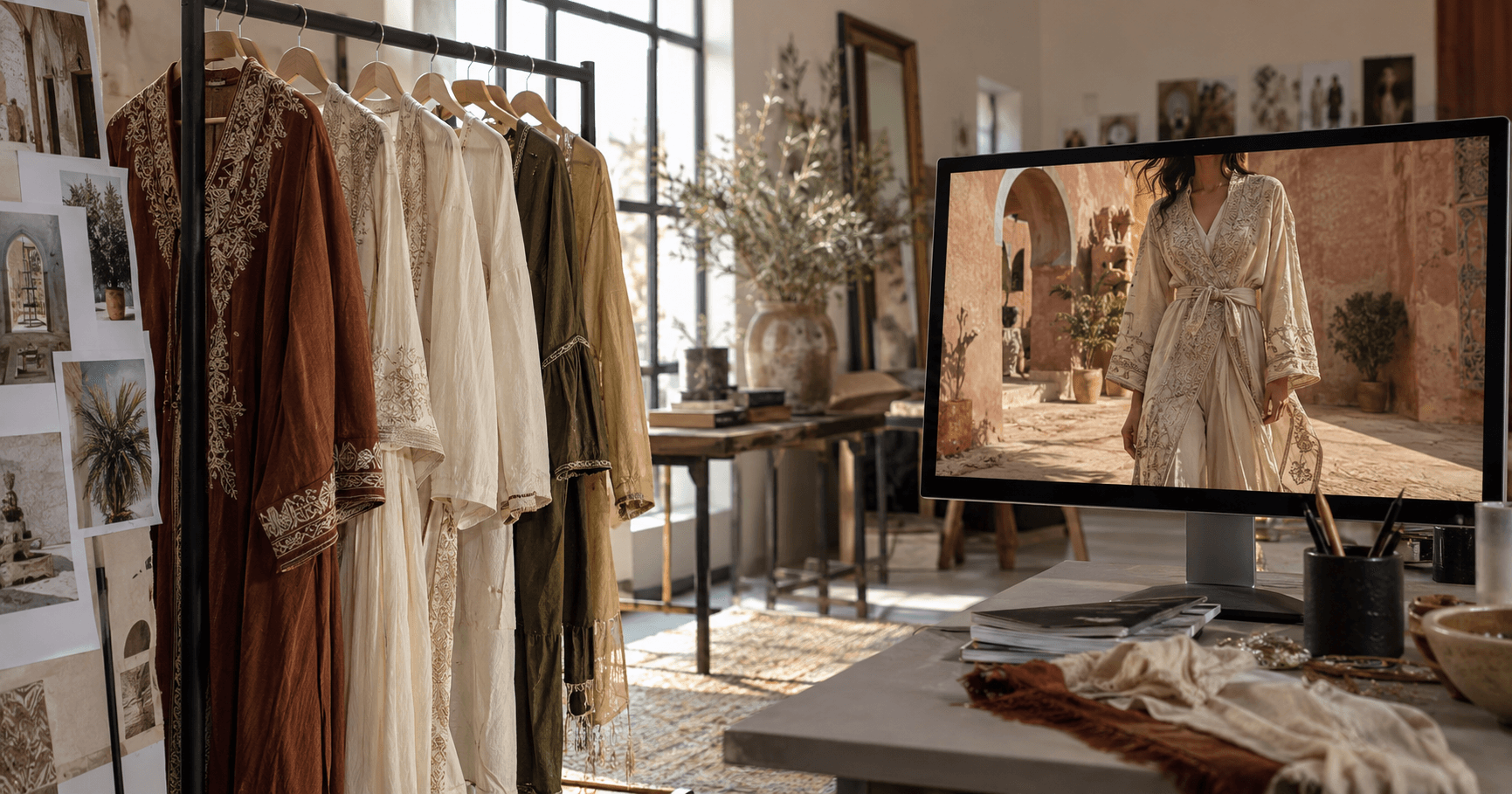
Mango's Sunset Dream campaign for its Mango Teen line was developed entirely with generative AI, but the workflow behind it is what makes it instructive. Mango photographed each real garment from the collection first, then trained a generative AI model on those photos so it could learn how to position the actual clothing on a model and produce editorial-quality images. The results read like a genuine location shoot, with imagery that looks like the Medina of Marrakech, but the garments were real while the model and the location were synthetic. An internal team then did the work that kept it credible: the art team selected, retouched, and finalized the AI outputs, with design, art direction, styling, dataset management, AI model training, and a photography studio all collaborating. The campaign was rolled out across 95 markets and tied directly to Mango's 2024 to 2026 strategic plan, with the company framing AI as a value-creation lever rather than a cost cut.
For TQC, which serves fashion labels directly, this is the most useful reference available for a client who asks "can we do an AI campaign without it looking fake or cheap." The answer Mango demonstrates is that accuracy comes from grounding the model in real product photography, so the clothing a customer sees is the clothing they actually receive, and that human art direction sits at the end of the pipeline, not nowhere in it. Notably, Mango also avoided most of the backlash that hit earlier adopters by positioning the work as innovation for a teen sub-brand rather than a replacement for its main campaigns, a framing lesson worth passing to any client nervous about public reaction. The practical pitch for a smaller fashion label is a scaled-down version of the same method: shoot the real collection once, train on it, and generate campaign variations, seasonal refreshes, and market-specific looks without booking a new shoot every time.