A Children’s Book Put AI-Generated Landmarks in the Wrong Place. Here’s the Accuracy Check Every AI Illustration Project Needs
A children’s book featuring AI-generated illustrations of real Boston landmarks sparked debate at a Claremont school event after readers noticed factual inaccuracies in the artwork, a reminder that AI illustration carries real risk whenever the subject is something real rather than imagined.
A visit from author Giulio Savo to Claremont Middle School turned into a debate about AI illustration after readers noticed problems with his book, “Directive Detectives: The Freedom Trail Directive.” The book walks children past real landmarks, and that detail is exactly what raised concerns. Savo confirmed the images were made with AI, and reviewers flagged inaccuracies in how those real places were depicted. The Society of Children’s Book Writers and Illustrators, the field’s largest U.S. organization, has been part of the broader industry conversation this issue sits inside. This follows a pattern that goes back further than this one book. A 2022 AI-illustrated children’s book drew criticism for floating objects, inconsistent shadowing, and characters whose hands looked distorted, flaws that readers can spot immediately even when they can’t name what’s wrong with the generation technically.
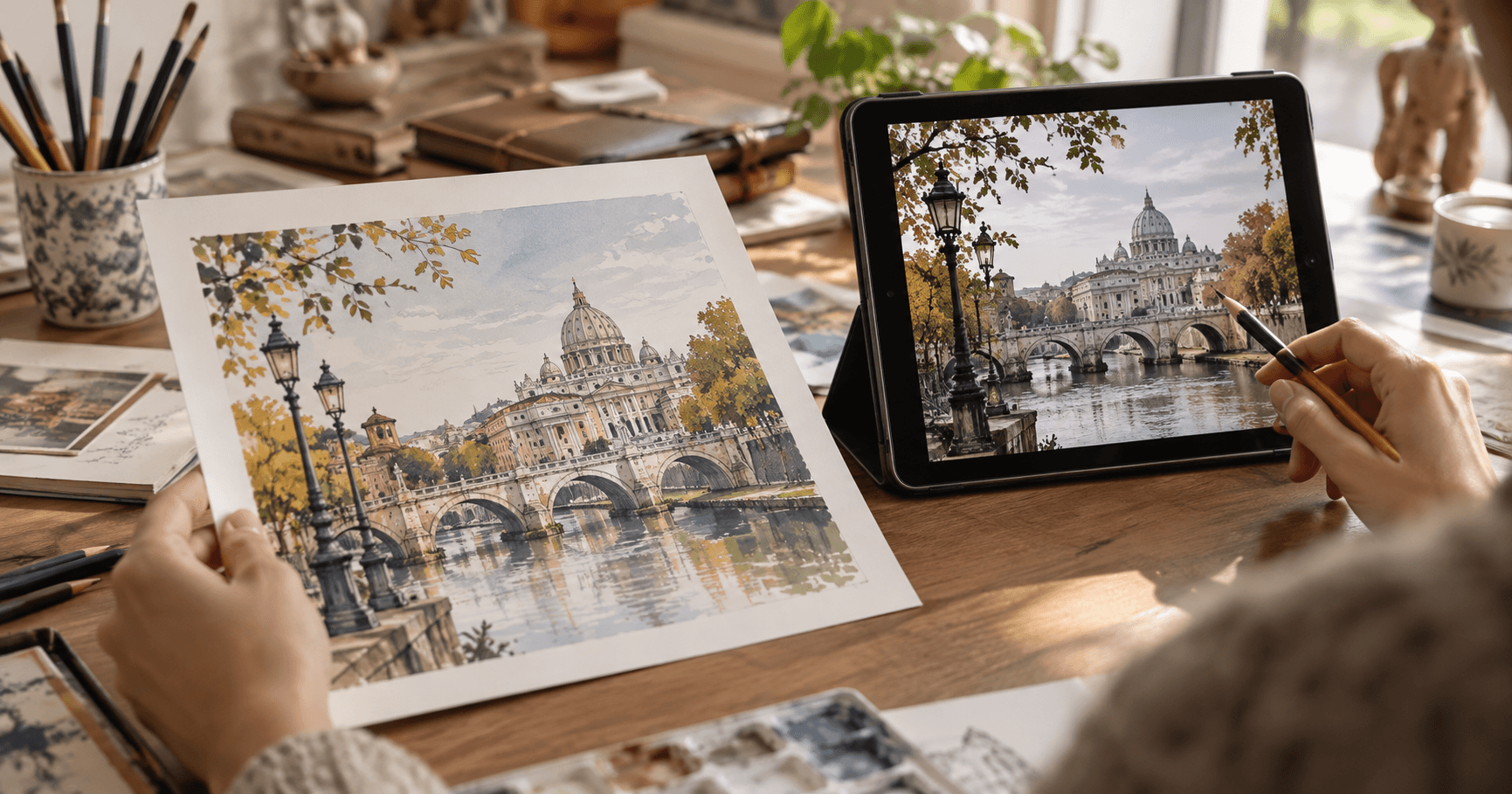
The lesson here is specific, not a blanket case against AI illustration. Fictional characters, invented worlds, and stylized scenes carry low factual risk, because there is no real-world reference a reader can check them against. Real places, real events, and real people are a different category entirely, because an error isn’t a stylistic quirk, it’s a factual mistake sitting in front of a child who has no way to know it’s wrong. Any studio producing AI-assisted illustration for educational content, nonfiction, or marketing tied to real locations needs a verification step before delivery: cross-check architectural details, signage, and layout against real references, and have someone who knows the actual place review the final art, not just the brief. This is also a useful case to raise with publishers and brands directly, since the industry is actively discussing whether illustrations involving real subjects need a different, more rigorous review process than purely fictional work, and being ahead of that standard is better than being caught behind it.